EXHIBIT #4 · CRYPTO HISTORY, DECLASSIFIED
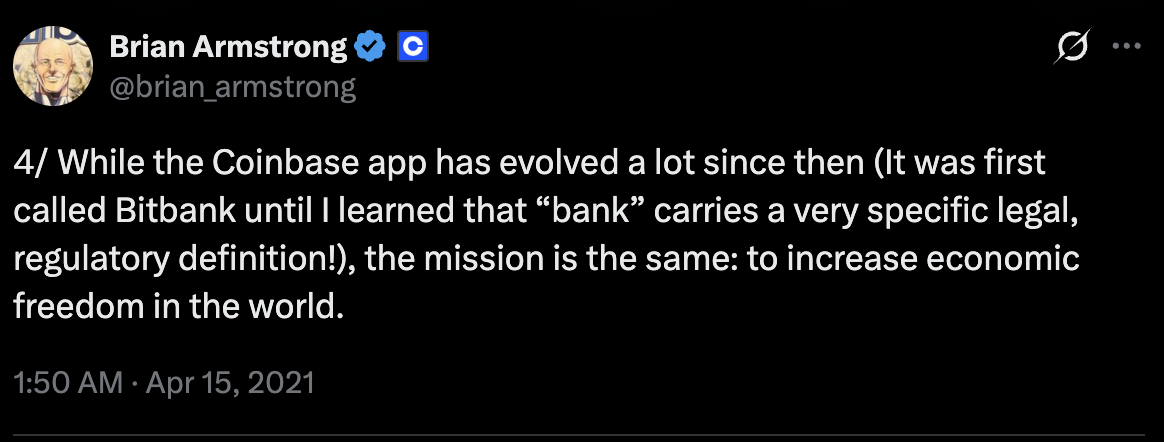
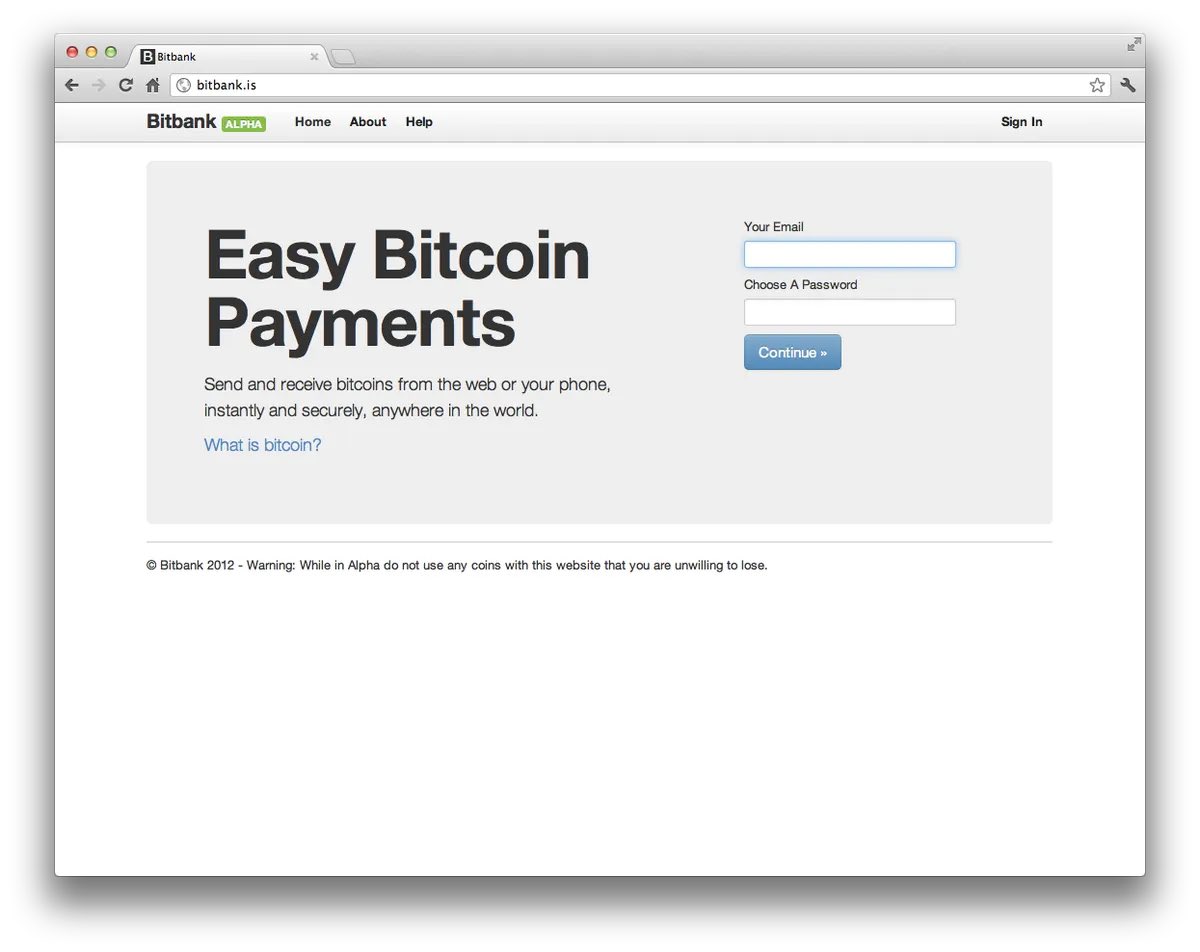
In 2012, Brian Armstrong built a bitcoin wallet called Bitbank. Then the lawyers explained that “bank” carries a very specific legal, regulatory definition. So the name got buried, and Coinbase became a $50B company on top of it. We dug it back up.
A community memecoin. Not a bank. Not affiliated with Coinbase, Inc.
THE CASE FILE
Two pieces of evidence. One buried name. Judge for yourself.
THE LEDGER
“Easy Bitcoin Payments.” A sign-up box, a glossy blue button, and a warning not to use money you can't lose. Peak 2012 web design. Peak honesty.
“Bank” is a regulated word. The name gets quietly retired. Bitbank becomes Coinbase. Nobody throws it a funeral.
Same week, Brian tells the origin story on Twitter, out loud, in public, for anyone paying attention. Almost nobody was.
$BITBANK launches. No lawyers this time — just the internet, deciding a good bit deserves a second life.
ASK THE TELLER
No. Coinbase is a publicly traded company with actual lawyers. We are a joke about their name that has a token attached. If you're from Coinbase legal: hi, we love you, the tweet is public record.
Absolutely not, and that is legally the entire point of this website. See: the reason the name was retired in the first place.
Yes — April 15, 2021, on X, in a thread about Coinbase's direct listing. Screenshot is Exhibit B above. We didn't write his tweet, we just built a website around it.
Only trust the CA pinned on our official X account. If someone DMs it to you first, it's fake — that's true before launch, at launch, and forever after.
No. This is a memecoin built on a fourteen-year-old naming footnote. Buy what you can afford to lose — 2012 Bitbank told you that before anyone else did.